Request for Information (RFI) at Wells Fargo | Senior UX/Visual DesignerTRANSFORMING BANKING PERIODIC REVIEW PROCESS INTO A SELF SERVICE DIGITAL PRODUCTExpertise: UI Design | Responsive Web | Design Systems
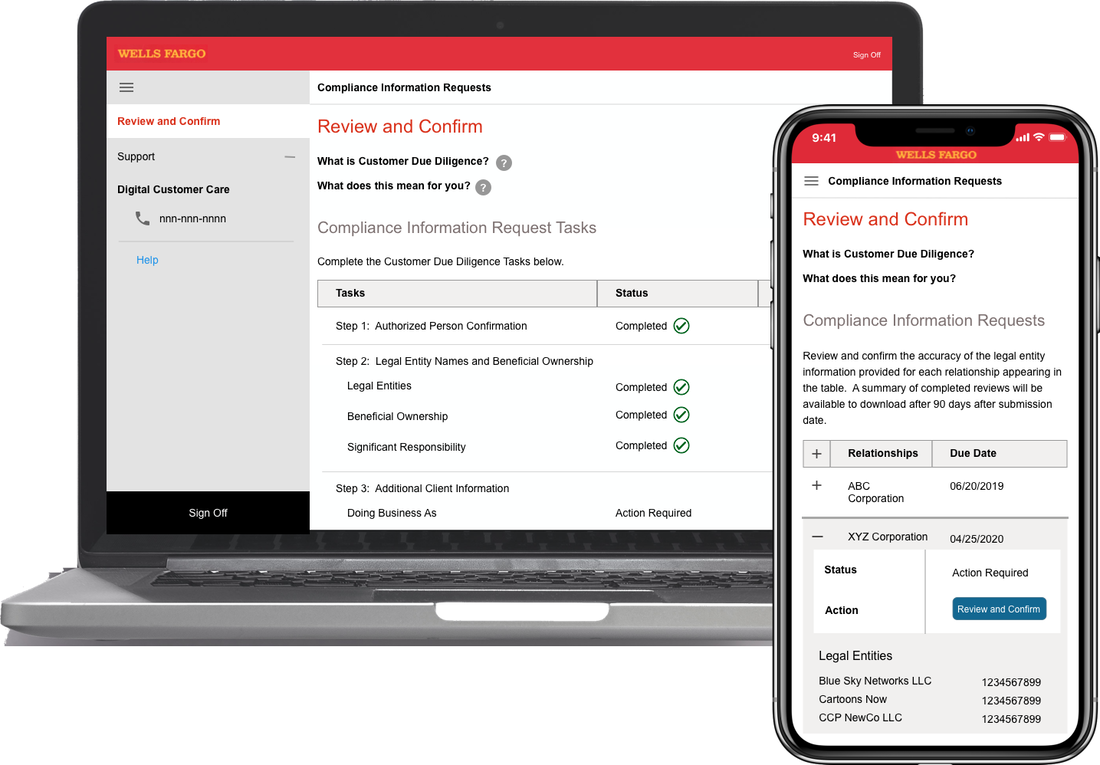
Overview: The Request for Information tool is part of the Wells Fargo's business application suite of products, which allows business customers to verify their corporate information on a digital platform. |
My Role
My role was a visual designer for this project with the task of developing conceptual mockups and final designs for RFI, which consisted of multiple areas related to company's structure and ownership.
The Challenge
The challenge was how to get users to adopt a digital process for verifying and editing corporate relationship information such as legal entities, the markets served by their companies, and beneficial ownership structure. At the time, the process of verifying or changing relationship information was done manually by working with a relationship manager and having to review and sign hundreds of documents.
User engagement and understanding of such complex information in a digital product were critical challenges we wanted to solve.
Research: Personas and Scenario
To ensure a high level rigor in the UX design process, I, along with another UX designer established a core set of design documents, including personas, styleguide specifications and user flows. To ensure we got through design reviews and iterations, I set up a weekly cadence of meetings with the project stakeholders, including engineering, accessibility, creative and product teams.
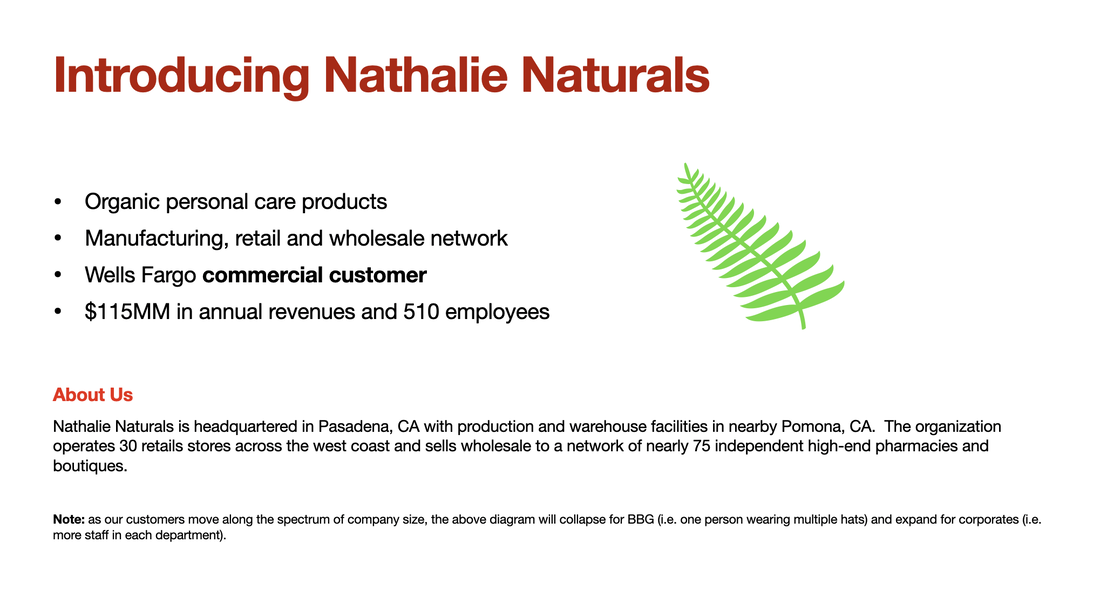
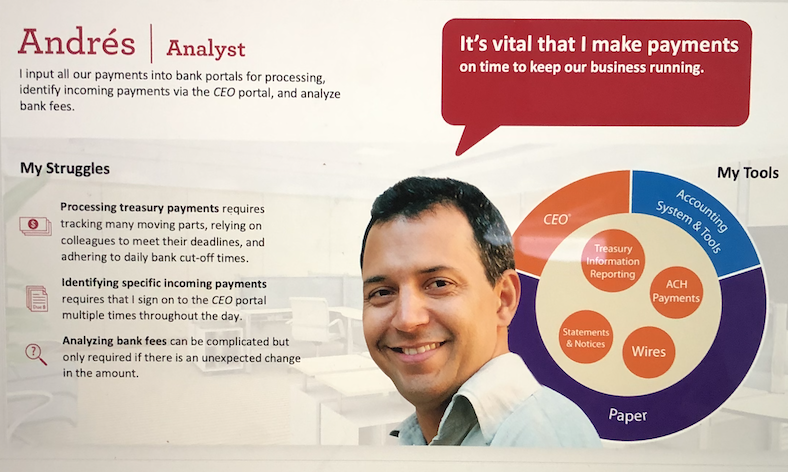
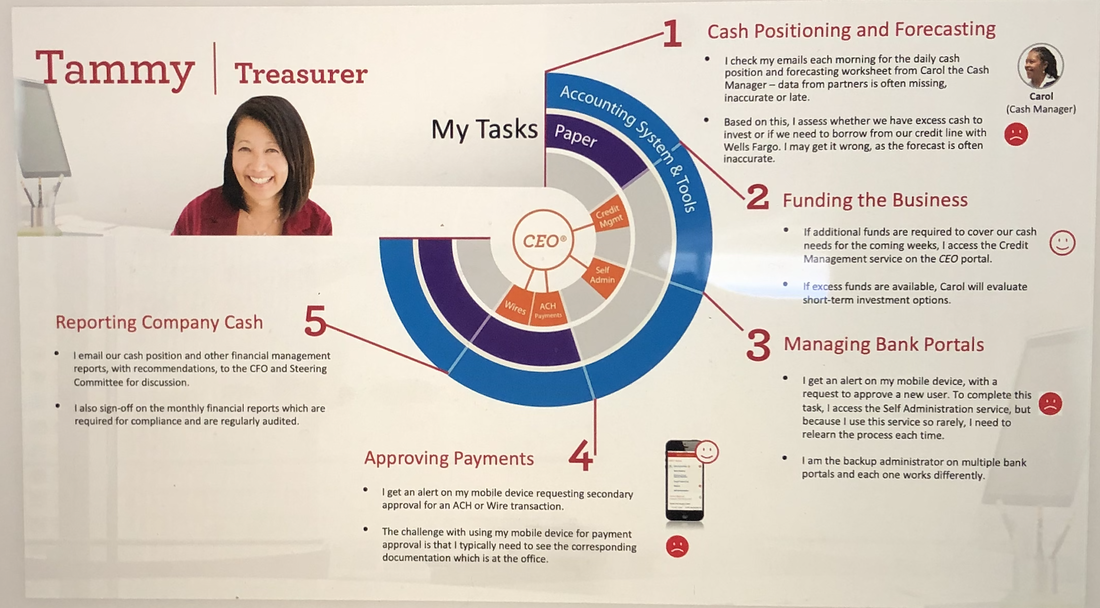
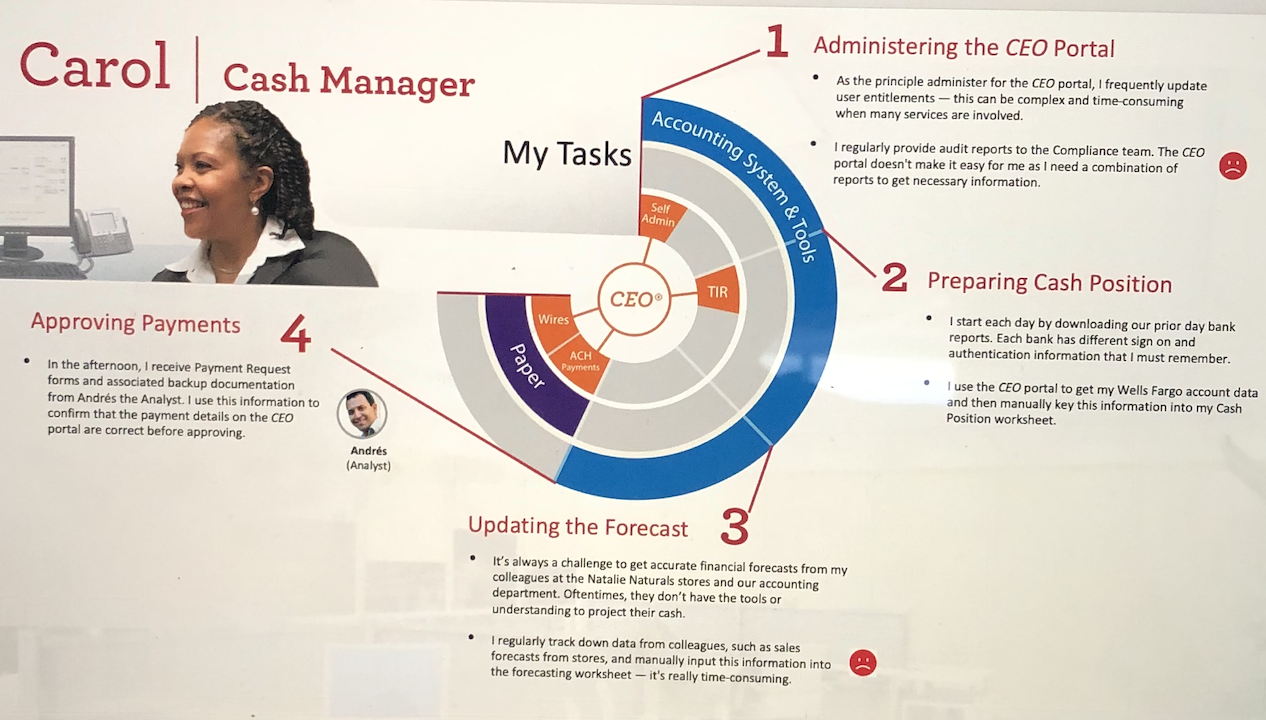
We developed a scenario for a health foods boutique store and three personas based on types of individuals who would be typical users for Wells Fargo's business applications.
By following this approach, I was able to focus on creating use cases that would be converted into user stories. This was in Sprint -1 in Agile development process, so I got approvals on the wireframe from the design director and then had a meeting with the larger project teams (i.e. Engineers, QA, product, business analysts, creative) to break up the wireframes into individual user stories.
During some stages of the design process, we conducted usability testing sessions. I created the prototype based on use cases we wanted to test because we had questions about the interactions and flows of those use cases. After the usability study was completed, I worked with the user researcher to develop design recommendations on the synthesized findings.
User Flow
By conducting multiple discovery sessions and workshops with the project stakeholders, I was able to get a clearer vision for the company information verification and change process.
Final Designs
The personas helped to inform the designs. I collaborated with a user researcher, design manager, interaction designer and producer to develop designs for RFI. I applied components from the Pioneer design system to develop the final mockups.
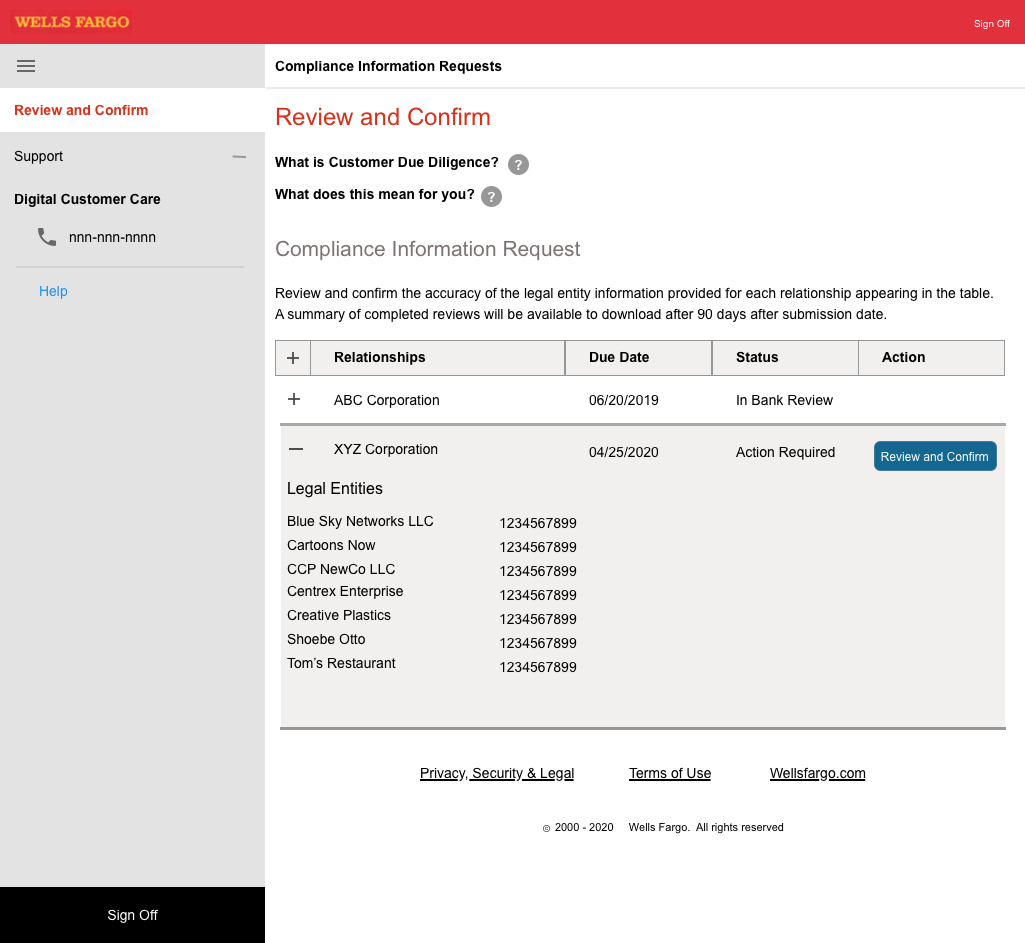
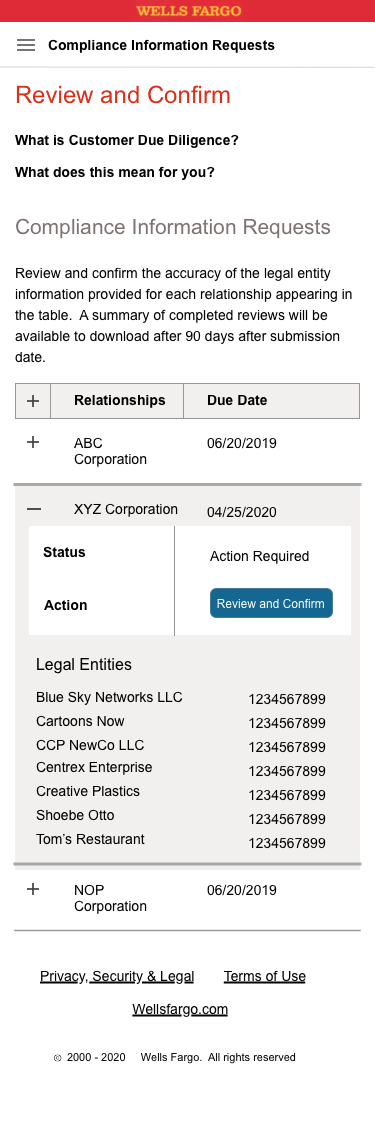
FEATURE HIGHLIGHTSChoosing Company to VerifyThe first step in the process is to choose a company/entity for the customer to start the verification and edit process.
|
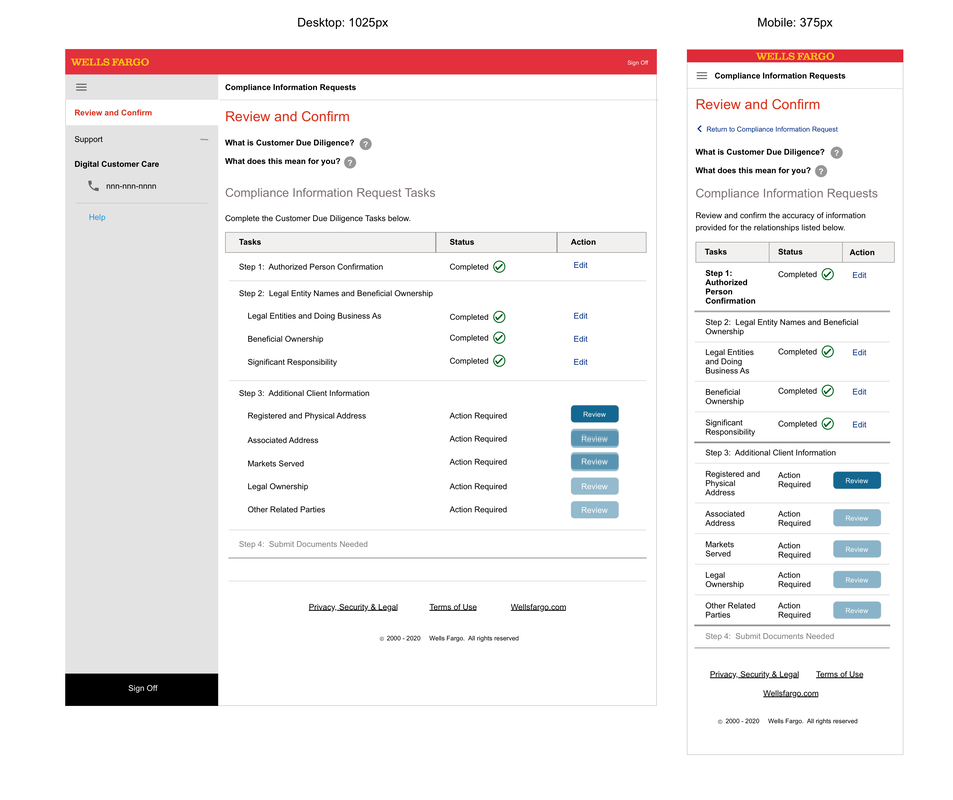
FEATURE HIGHLIGHTSSteps HubThe first step in simplifying the verification and edit of company structure was to create a hub for all the steps required to complete the tasks by the authorized company representative. I designed these screens to have an all-in-one hub to complete the request for information process.
|
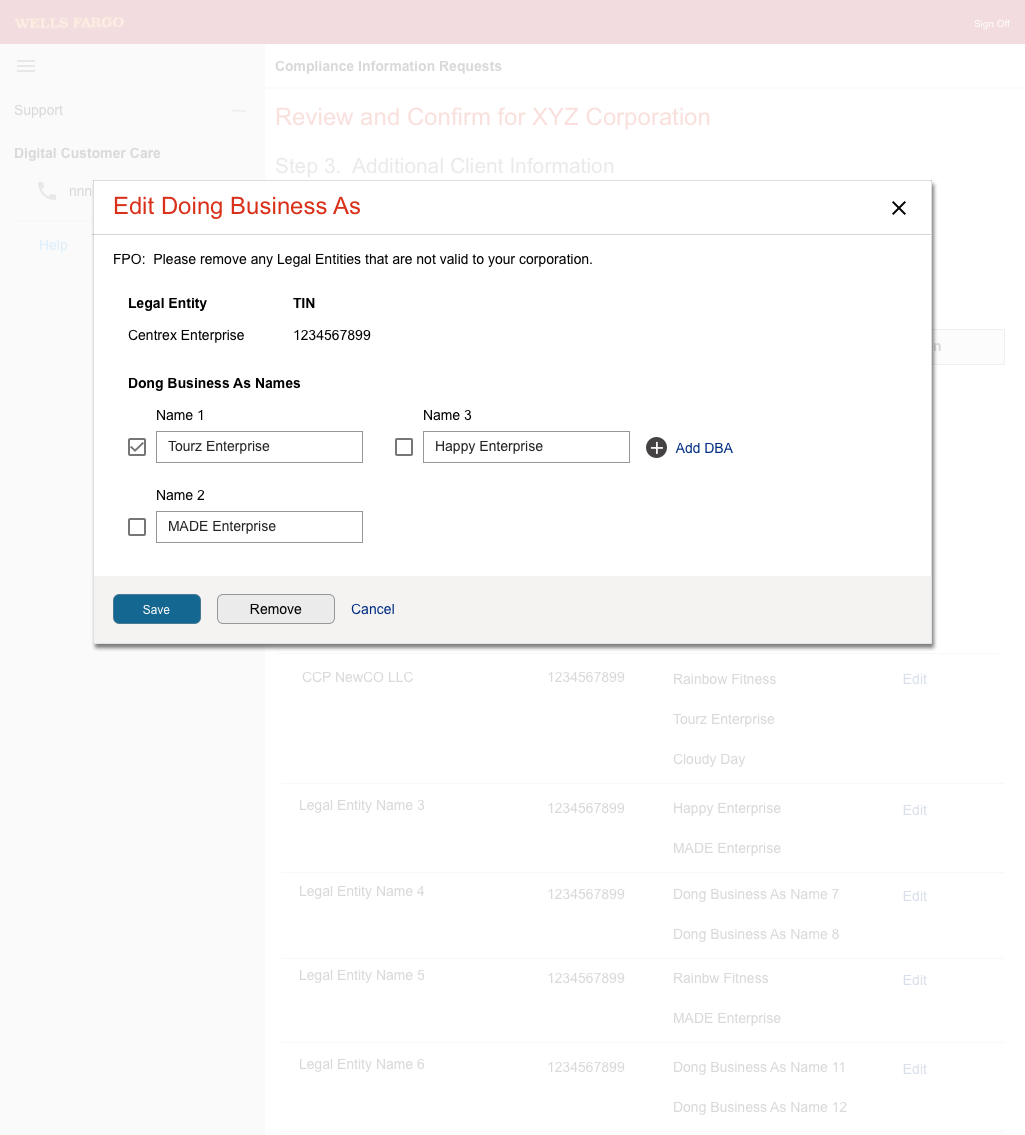
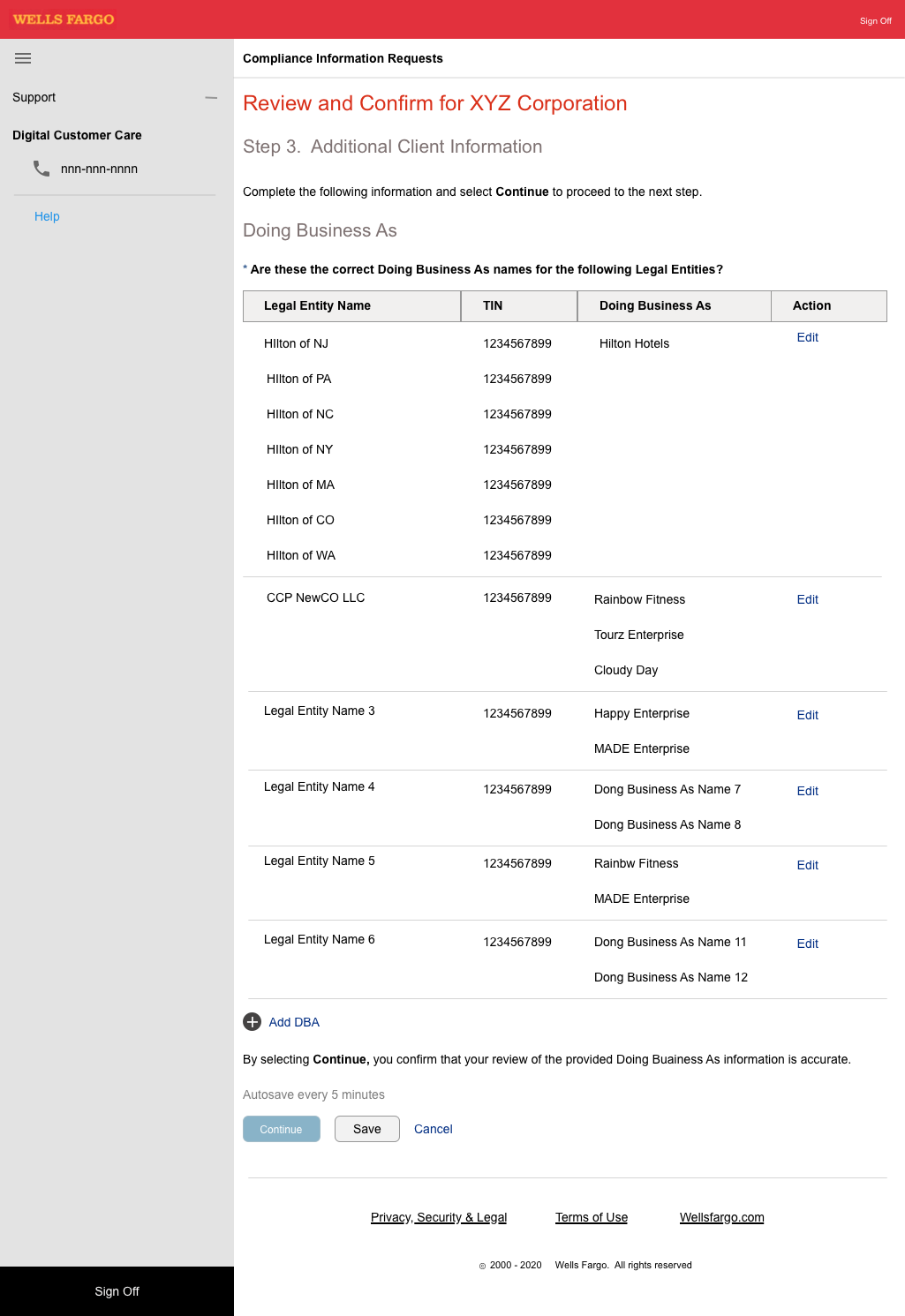
FEATURE HIGHLIGHTSVerification and EditIn order to verify the company information, we wanted to create a simple way to review and if necessary, edit the information pertaining to each step category (e.g. Step 1, Step 2)
|
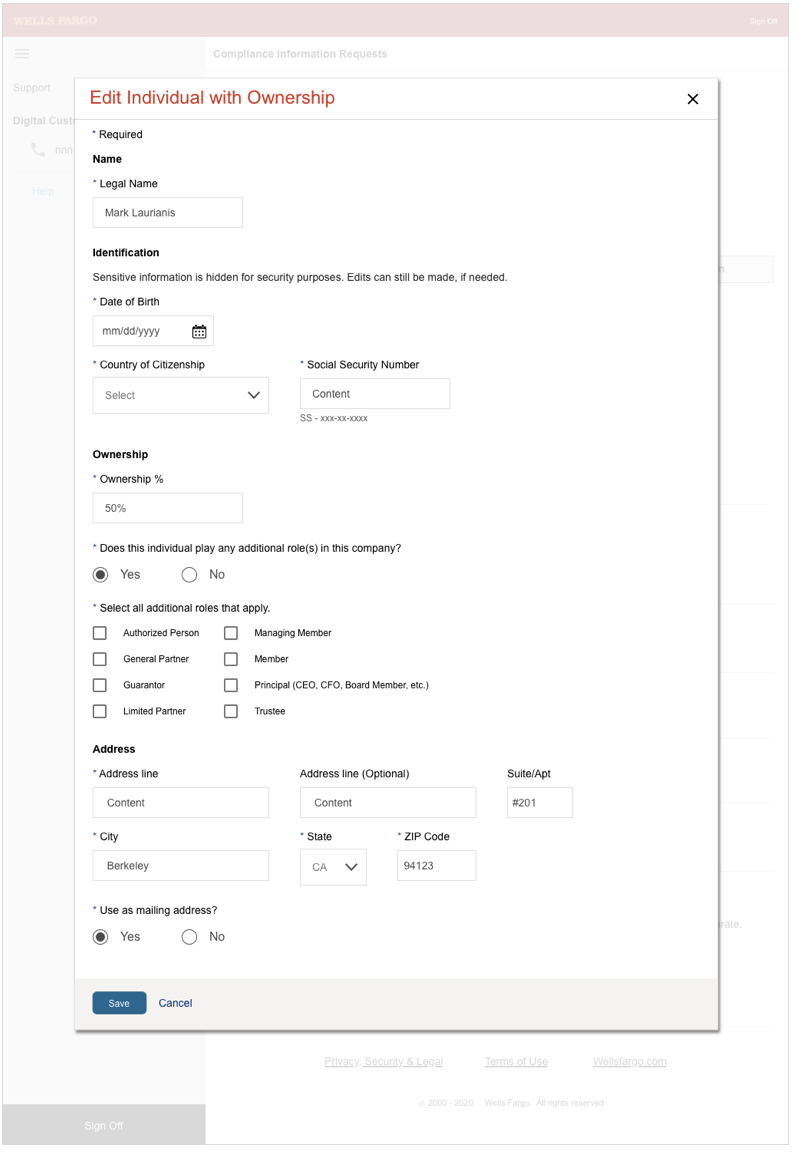
Individual step with Edit button in context to each beneficial ownership type for easier editing of information
|